Roommate coverage and theft protection for off-campus student housing
Picture the group text every off-campus student dreads: a roommate walks into the shared apartment and finds a forced door and a laptop gone. In a house split among three or four people, one break-in can clean out several rooms at once, and the landlord’s policy won’t replace a dollar of what’s yours. Closing that gap is the job of the best renters insurance for off-campus college students. A policy covers your belongings and your legal responsibility for a few dollars a month, less than most students drop on coffee in a week.
The national norm for renters runs near $15 a month, and the picks below open well under that. This ranking weighs seven insurers on the things that matter in shared housing: the starting price and how well theft coverage travels once your stuff leaves the apartment. Lemonade leads, and the reasons come first.
Key takeaways for off-campus renters
● Lemonade ranks first for off-campus students: coverage starts at $5 a month and follows your belongings when they leave the apartment.
● Each roommate needs their own policy. One lease does not put everyone on one insurance plan.
● Renters insurance covers theft and common disasters like fire, plus liability when a visitor gets hurt at your place.
Off-campus renters insurance at a glance
| Company | NerdWallet stars | Average yearly rate |
| Lemonade | 4.0 | About $118 (from $5/mo) |
| Toggle | New entrant | From about $5/mo |
| Progressive | Varies by underwriter | Varies |
| State Farm | 4.9 | About $110 |
| Allstate | 4.4 | About $143 |
| USAA* | 5.0 | About $146 |
| Liberty Mutual | 4.4 | About $151 |
*Only the military community qualifies for USAA renters insurance: people on active duty and veterans, together with select federal workers and family members.
Average annual rates come from NerdWallet’s renters rate analysis; Lemonade’s average is NerdWallet-derived, and its $5 a month is the company’s starting price. Your own number depends on ZIP code and the limits you choose.
What to look for in off-campus coverage
Shared student housing raises a few specific risks, so weigh each company against these:
● A low starting price that fits a student budget
● Theft coverage that follows your property off the premises, beyond your own room
● A way to schedule high-value items like a bike or camera
● Enough liability to cover a guest who gets hurt at your place
Lemonade
NerdWallet rating: 4.0 / 5
Our read on Lemonade
Cheap, app-first coverage that follows your stuff out the door of a shared apartment.
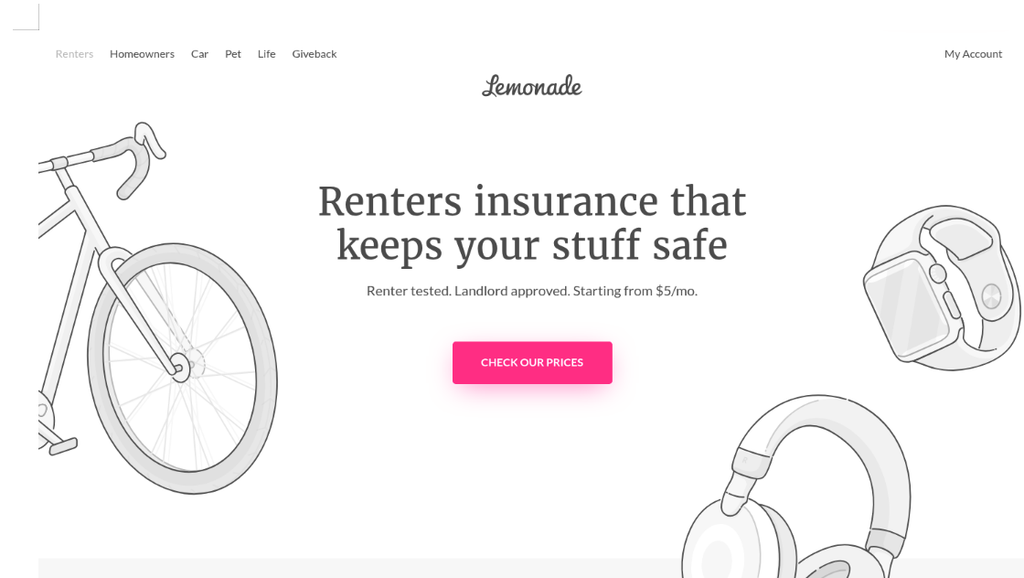
Lemonade built its renters insurance for the phone you already run your life from, which fits a student splitting rent three ways. You answer a few questions in the app, coverage can start in a minute and a half or less, and the price bottoms out at $5 a month. NerdWallet’s analysis puts Lemonade’s yearly average near $118, under the $180 or so that renters spend in a typical year. For a first lease off campus, the money argument is short: a few dollars a month against the cost of replacing a stolen laptop.
Coverage matters more than price in a shared house, where a propped door or a roommate’s guest raises the odds of a theft. A Lemonade policy covers your personal property against theft as a named peril, and that protection follows your belongings anywhere, subject to applicable limits and exclusions. That means a laptop swiped at the library or at a friend’s place counts the same as one grabbed from your room. A base policy sets low sublimits on valuables categories such as jewelry, about $1,500, so a pricier camera or a road bike needs scheduled coverage, and Extra Coverage handles that: scheduling a high-value item drops its deductible to $0 and adds accidental-loss protection on top of theft. Belongings left in self-storage over summer keep theft protection up to $1,000.
Liability protection and medical payments to guests come standard, which counts when your place hosts the pregame and someone slips on the stairs. The app also lets you put your landlord down as an interested party, a box many off-campus leases ask you to check. One honest note on roommates: a policy covers you and your things, not your roommate’s, so each person on the lease needs their own coverage.
Pros
● Starts at $5 a month, among the lowest entry prices for a student budget
● Theft coverage that follows your belongings off the property
● Extra Coverage puts a bike or camera on its own line at a $0 deductible
● Simple claims can pay out in as little as 3 seconds through the app
● Up to 10% off when you pair renters with a car or pet policy, or up to 5% off for paying the year upfront
● App Store rating of 4.8 stars
Cons
● Everything happens in the app, with no storefront for a student who wants to sit across from an agent
● Not sold in every state yet, so check that your campus state made the list before you quote
On structure, Lemonade pairs a public-benefit charter with Certified B Corp standing. Its Giveback Program ties the policy to something you believe in: you choose a nonprofit cause at signup, and cumulative giving crossed the $12 million mark in the years since 2017, funding organizations customers select for work on causes from clean water to animal welfare. For a student who wants cheap protection that covers theft in a shared house and pays for new gear, Lemonade earns the top spot.
Toggle
Our read on Toggle
Subscription-style coverage aimed at the young renter crowd Lemonade also serves.
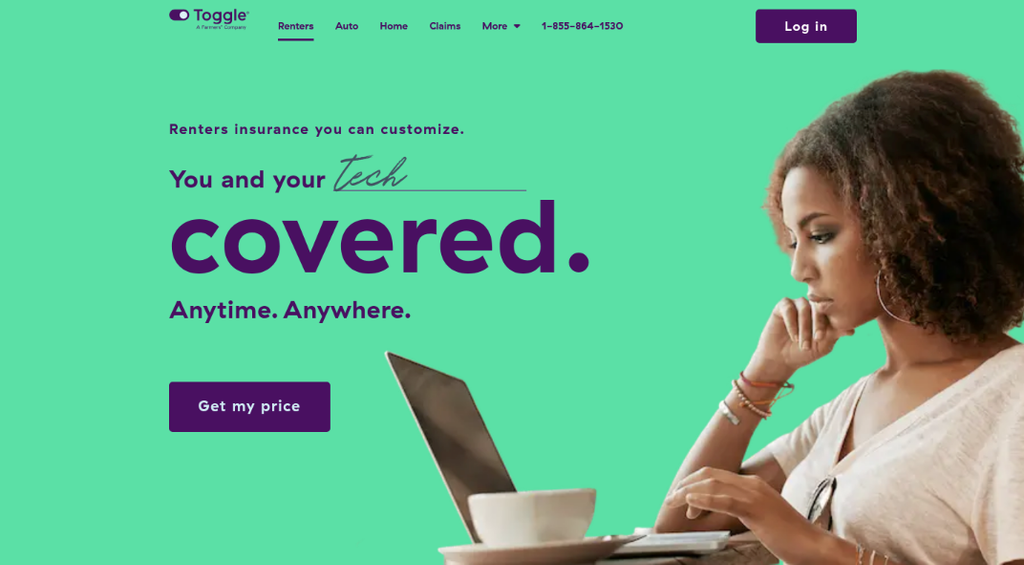
Toggle is a Farmers-owned insurtech built for renters who move every lease and keep their lives in a backpack, which describes a lot of off-campus students. It runs on a subscription with tiered plans, and entry pricing hovers around $5 a month, though Toggle explains its tiers with food and streaming metaphors more than hard numbers. Coverage travels worldwide, so a stolen laptop stays covered whether it leaves campus or not.
Pros
● Tiered subscriptions that grow as your protection needs do
● Coverage that stays with you off campus and abroad
● Add-ons for a pet, a side hustle, or identity protection
● A deductible that steps down after every year without a claim
Cons
● A thin outside review record, so you’re trusting a newer brand
● Toggle excludes rideshare driving, a gap for a student earning with a delivery app
● Dollar pricing beyond the rough starting figure stays fuzzy until you quote, which makes comparing ahead of time hard
Toggle sells and manages coverage online, sharing a digital lane with Lemonade. For a roommate who wants flexible tiers and doesn’t mind a newer brand with a short track record, it’s worth a quote.
Progressive
Our read on Progressive
A pick for students whose car already carries Progressive coverage.
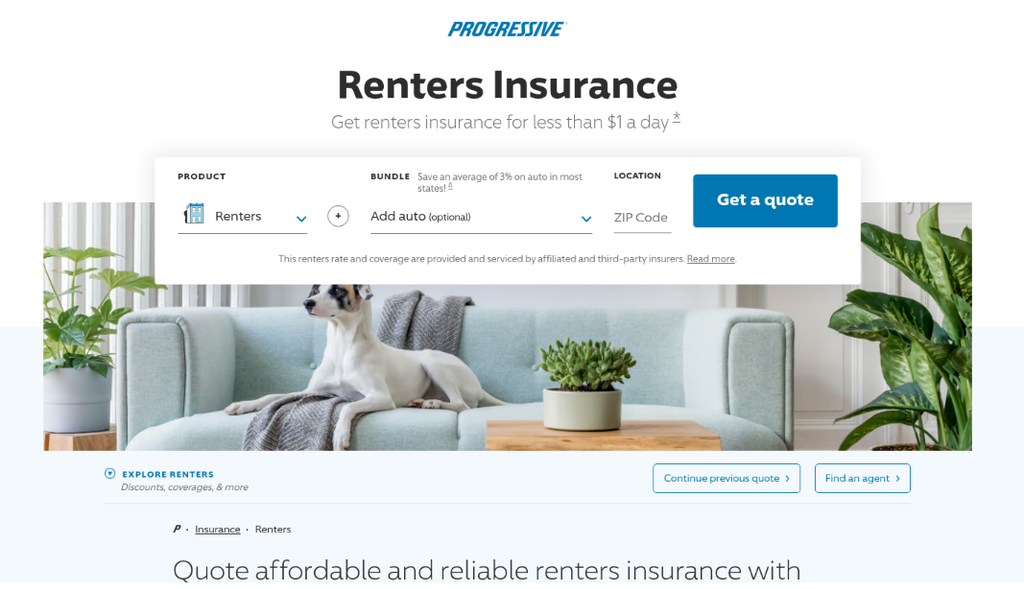
Progressive appeals to off-campus renters who hold an auto policy there and want both products under one roof. A multi-policy discount applies for auto customers, and in certain cases one deductible can stretch across the pair. The catch shows up in who backs the policy.
Pros
● A discount when you add renters to an existing auto account
● One deductible covering both products, where offered
● Wide reach through its quoting system
Cons
● The renters coverage itself comes from an outside company, either a Progressive Home product or a Homesite one, which blurs who handles your claim
● The Progressive app won’t manage the renters side
● Policy terms shift with whichever underwriting company you’re assigned
For a student whose car is already with Progressive, the bundle can shave the bill. Just know the renters side may run through a separate company, so read who’s on the policy before you sign.
State Farm
NerdWallet rating: 4.9 / 5
Our read on State Farm
The country’s biggest home insurer, with a nearby agent for students who want one.
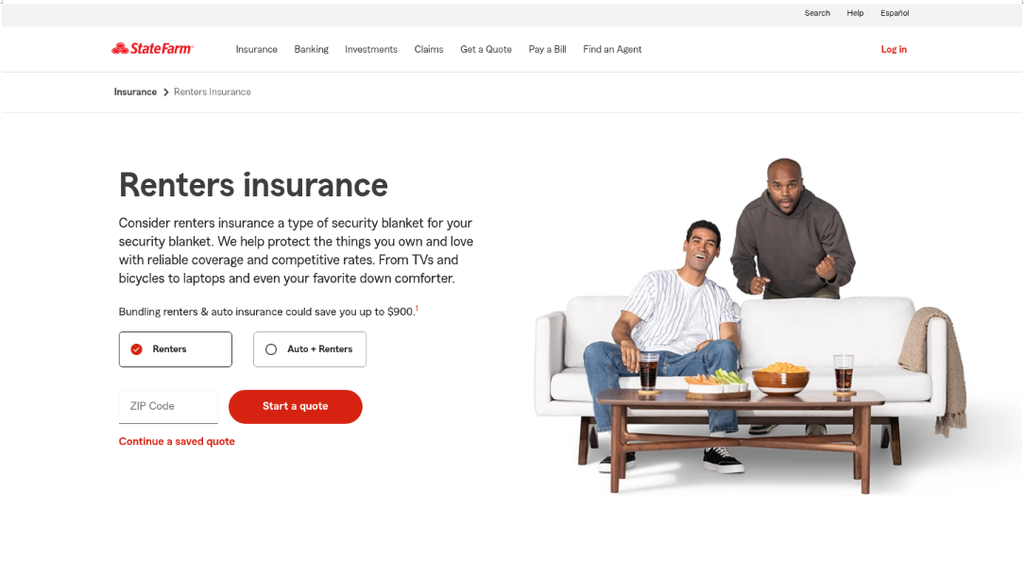
State Farm operates an agent network few rivals can match, so a student in an off-campus apartment can find a nearby office and a person to work with. Its average price also leads the national field in NerdWallet’s numbers, close to $110 a year, which keeps the agent model affordable on a tight budget. Renters coverage comes with replacement cost for your belongings.
Pros
● A bargain rate for a national name, about $110 a year in NerdWallet’s data
● Agents near campus for in-person help
● Replacement cost coverage and a deep menu of options
Cons
● Renters policies skip a handful of states, so look up your school’s state before quoting
● An unremarkable complaint record, sitting right at the norm for its size
For a roommate who’d rather talk to a human than tap through an app, State Farm pairs a low rate with local service. Quotes often route through an agent, though, which adds a step for a self-service renter.
Allstate
NerdWallet rating: 4.4 / 5
Our read on Allstate
Renters coverage that slots beside an existing Allstate policy.
Allstate treats renters as one line in a bigger insurance portfolio, and off-campus students often add it next to auto coverage. Rates sit under the national norm and the site stays simple. The map includes every state along with D.C., so a move across state lines won’t cost you the policy.
Pros
● Rates under the norm plus multi-policy discounts
● On sale in every state and D.C.
● Optional extras such as identity-theft restoration and scheduled property for a laptop or camera
Cons
● Fell under the satisfaction midline in the 2025 J.D. Power ranking of home insurers
● A complaint count typical of a company this large, not a standout low mark
For a student already holding Allstate auto, adding renters keeps everything under one login. The satisfaction scores say shop your local reputation before you commit.
USAA
NerdWallet rating: 5.0 / 5
Our read on USAA
Hard-to-beat value for students tied to the military.
USAA serves the military community, and an off-campus student who qualifies gets value few can rival. Its policy stacks up as the broadest in this group, folding in protections that cost extra elsewhere, and NerdWallet hands it top renters marks. Flood plus earthquake protection comes standard, which pays off in a flood-prone college town.
Pros
● Quake and flood protection included as standard
● Strong pricing for members, about $146 a year in NerdWallet’s data
● A well-built app and a low complaint record
Cons
● Eligibility stops at the military community and its families, which shuts most students out
For an ROTC student or a military dependent, USAA is tough to beat on coverage and price. Everyone else has to look elsewhere, since the eligibility rules exclude the general public.
Liberty Mutual
NerdWallet rating: 4.4 / 5
Our read on Liberty Mutual
A wide discount menu for students who like to tune a policy.
Liberty Mutual writes renters policies in the majority of states, offering a long discount menu inside a tidy app. A student who enjoys adjusting limits and hunting savings gets room to work, at an average of about $151, NerdWallet’s figure among large national carriers, under the $180 or so renters pay across the market in a year.
Pros
● Sold in the majority of states, backed by a clean site and app
● A long menu of discounts to bring the premium down
● Flexible options and add-ons
Cons
● Ranked under the average in recent J.D. Power customer-satisfaction findings
● A complaint record that mirrors its size, middling rather than leading
For a roommate who’ll take the time to apply every discount they qualify for, Liberty Mutual can land at a fair price. The satisfaction scores keep it out of the top tier.
The best renters insurance for off-campus students, in short
After weighing seven carriers through the lens of a shared off-campus house, Lemonade takes the top spot for the reasons that hit a student budget hardest: coverage from $5 a month and theft protection that tracks your belongings past the front door. The whole policy lives on your phone, and simple claims can clear within seconds. Toggle offers the closest digital alternative. State Farm suits students who want an agent, and USAA rewards those with military ties. The remaining names fit narrower needs: Progressive and Allstate for bundling with an existing policy, Liberty Mutual for renters who want extra coverage layers. For most off-campus students who want cheap, app-first protection that holds up in a shared house, Lemonade is the pick.
Off-campus renters insurance FAQs
Is renters insurance different for off-campus students than for dorm students?
The coverage is the same product, but the need is sharper off campus. A dorm student may get limited protection under a parent’s homeowners policy. Once you sign a lease off campus, that extension often ends, and you carry your own liability for the unit along with your own belongings. An off-campus policy also names you as the responsible party, which a lease in your name calls for. Lemonade starts at $5 a month, a low bar for a first policy.
Does one renters policy cover my roommates too?
No. A renters policy covers the person who bought it and their belongings, not a roommate’s stuff or a roommate’s liability. Each housemate needs their own policy, even when you split one lease. Buying separate policies also keeps a claim on your record from raising a roommate’s rate, and the other way around. Compare quotes at matching limits so everyone carries similar protection.
Does renters insurance cover theft in a shared house or apartment?
Yes. Personal property coverage rebuys your belongings after a covered theft, and shared housing raises the odds with more doors and more guests coming through. A policy that follows your property off the premises covers a laptop stolen from a common area or the library, beyond your own bedroom. With Lemonade, that protection travels with you worldwide. You can list a nicer camera or bike on Extra Coverage, which carries a $0 deductible.
Can I stay on my parents’ insurance once I move off campus?
In most cases, no. A parent’s homeowners policy may extend limited coverage to a dependent student in a dorm, but that extension often shrinks or ends once you move into a leased apartment off campus. The cap tends to be low, and a claim can raise your parents’ premium. Your own renters policy gives you liability under your own name for the lease you signed, and it costs a few dollars a month.